
We spent a week in Berlin at the end of January. It was freezy and snowy and altogether delightful, not least because of the copious amounts of food we consumed, from Bratwurst to Vietnamese dumplings to stacks of lovely cake (pics below). And as ever, the city was also a Krimi paradise, with its specialist crime bookshops and plentiful crime fiction events.
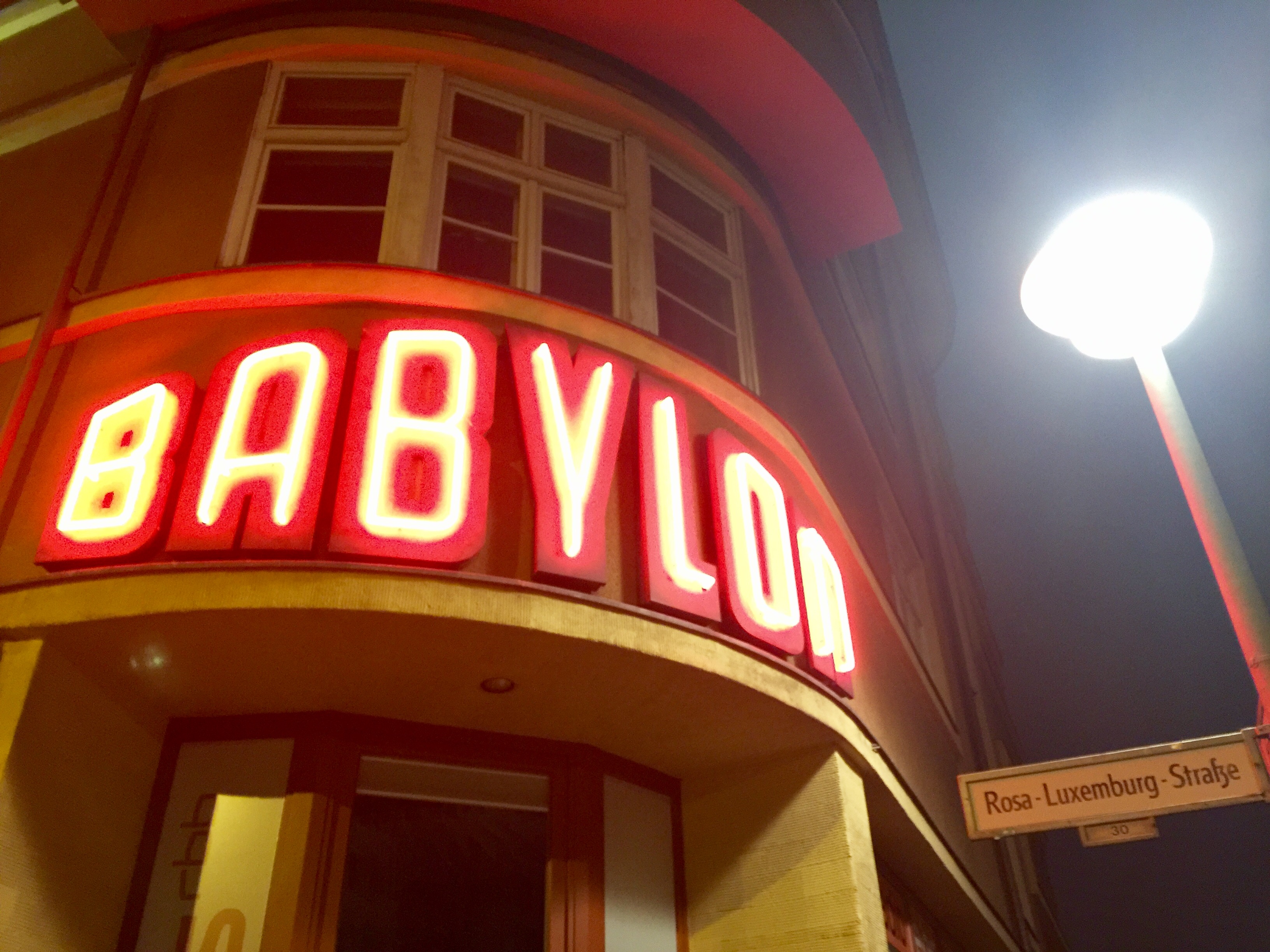
Kino Babylon in Mitte
Author Volker Kutscher was in town to give a reading from Lunapark, the sixth novel in his ‘Gereon Rath’ historical crime fiction series, which is set in Weimar and National Socialist Berlin. It took place in a wonderful old cinema called Kino Babylon, which opened in 1929 – the same year the series starts. In another nice twist, Babylon Berlin is the title of the first ‘Rath’ novel translated into English – by Niall Sellar for Sandstone Press – and the name of the high-budget Sky/ARD TV adaptation currently in production, directed by the wonderful Tom Tykwer (due to air later this year).
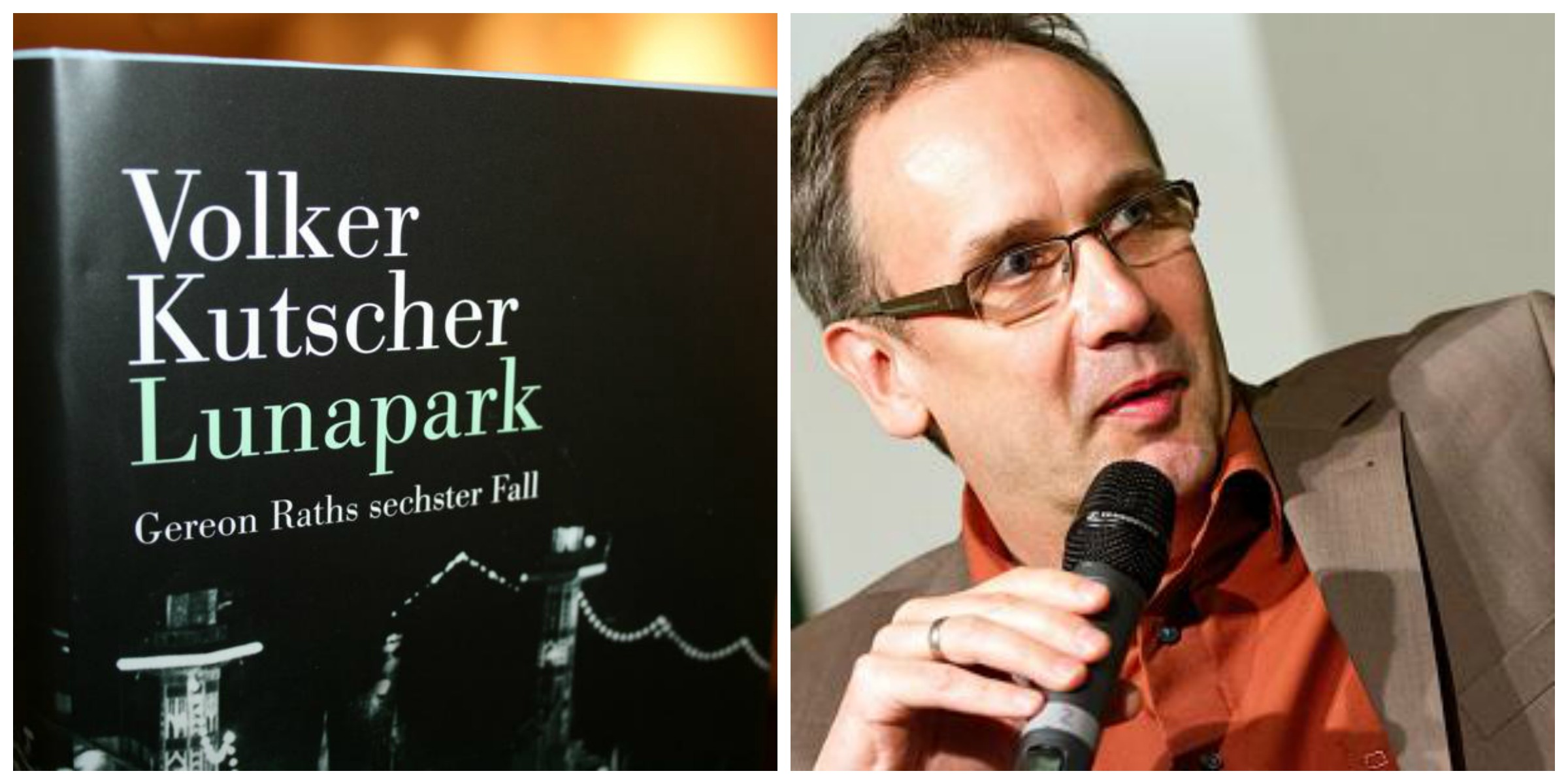
The format of these kinds of literary events is a bit different in Germany. Volker read out three substantial extracts, each of which highlighted a specific aspect of the novel (the rising persecution of Jewish-German citizens in Nazi Germany; working life in the Berlin police; growing political tensions in Rath’s own family). Together, these showcased Kutscher’s writing talents and gave the 300-strong audience a tantalising glimpse of where Rath’s story is heading. There was also some interesting discussion:
- Kutscher revealed that he plans to write nine novels in the ‘Rath’ series, ending in 1938, the year of the Reichskristallnacht pogrom (Night of Broken Glass), when it’s clear that Nazi persecution of the Jews is escalating and war is on the horizon. In addition, there’ll probably be a collection of stories to round the series off, giving ten books in total. His editor at Kiepenheuer&Witsch has different ideas; he’s going to try to persuade Kutscher to write more.
- The character of Gereon Rath is purposefully flawed. The author doesn’t want him to be viewed as a hero – the emphasis is on how he navigates his way through the very difficult political times in which the series is set.
- Kutscher’s Berlin is inspired by Erich Kästner’s Emil und die Detektive [Emil and the Detectives, 1929], and by American gangster stories and films. He uses old films and photos of everyday life in Berlin to get the detail right, especially when buildings no longer exist, such as the Alexanderplatz Police Headquarters (now the hideous Alexa shopping centre).
I had a bit of a chat with Volker after the event… Watch this space for some very exciting news….!

The big Dussmann bookshop in the centre of town has a section dedicated to Berlin Krimis
Another lovely stop was coffee with Katy Derbyshire to talk all things translation. Katy’s the translator of one of my favourite German crime novels – Simon Urban’s Plan D – and posts fascinating notes about the process of translating on her blog, love german books. You can read her post on Plan D here, which also gives an insight into the crucial role translators can play in getting European novels published in the UK.
Then it was off to the Miss Marple crime bookshop in Charlottenburg, where I picked up the first in the ‘Markus Cheng’ private investigator series by Austrian author Heinrich Steinfest (Piper, 2007 [2000]). I’ve been keen to get hold of this one since it was covered by Marieke Krajenbrink in our Crime Fiction in German volume. It’s not yet available in translation, but looks like a lot of fun – the setting is Vienna and the narrative has a nicely sardonic tone.
Miss Marple is one of at least three independent crime bookshops in Berlin – two others are Hammett and totsicher (dead certain). They seem to keep afloat quite nicely, probably because a German version of the net pricing agreement is still in place, which prevents them being undercut by bigger bookshops and supermarkets. That Germany is a nation of crime lovers was evident from the steady stream of customers during my visit, although there’s clearly a threat from big online retailers, as shown by the paper bag in which my book was wrapped.
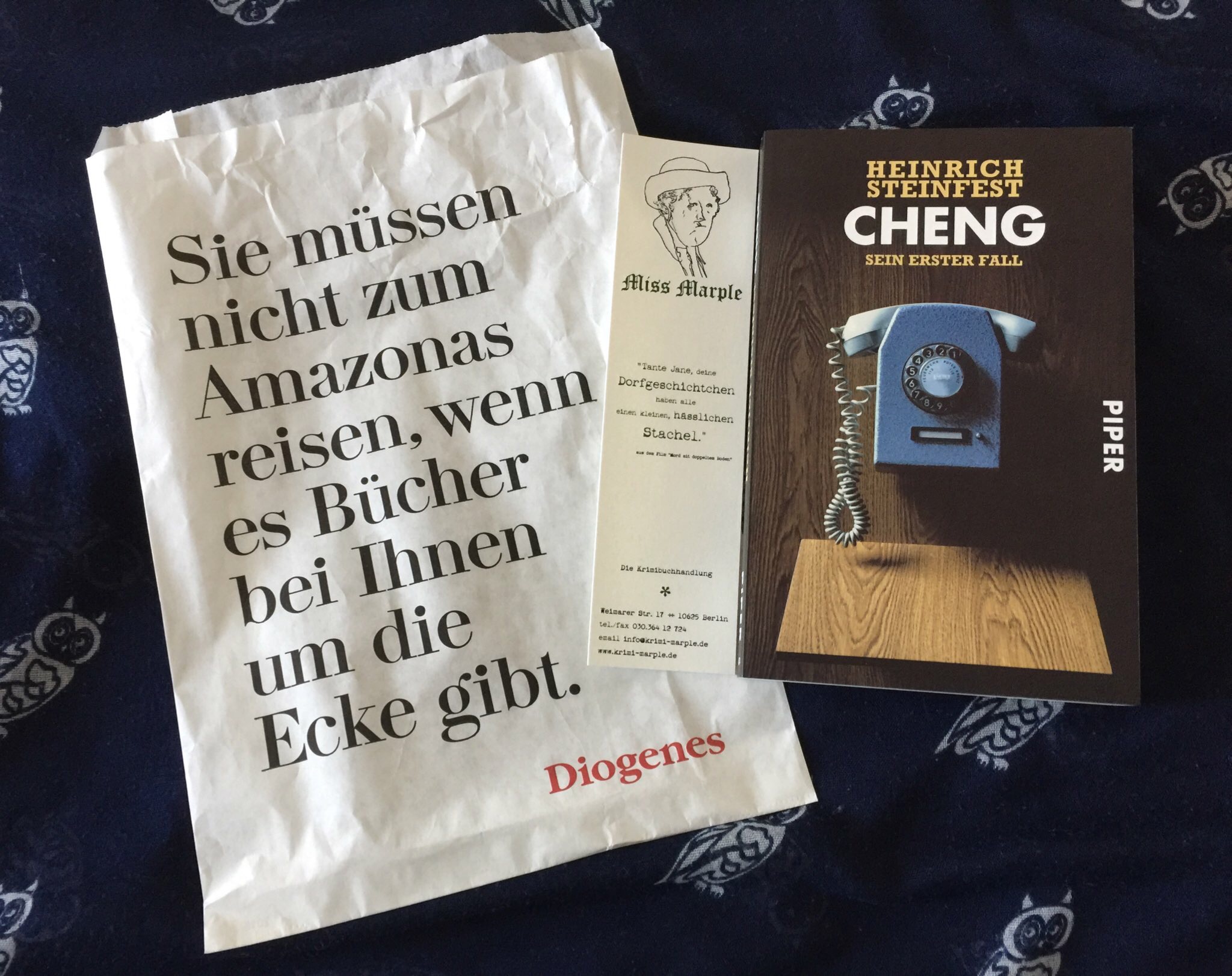
Rough translation of the slogan on the bag: You don’t need to trek to the Amazon when there are books right on your doorstep
This time we also made it out to the Glienicke Brücke, which marked the Cold War border between Potsdam (in East Germany) and West Berlin from 1949 to 1989. The bridge hosted three major spy swaps, which earned it the nickname The Bridge of Spies. The latter is of course also the title of the 2015 Steven Spielberg film starring Tom Hanks, which depicted the Abel/Powers exchange of 1962. I’d been very keen to visit for a while, and being there certainly lived up to expectations. You can very much feel the weight of history, and standing at the centre of the bridge, on the line between east and west, felt very strange indeed. It also happens to be an exceptionally beautiful spot, with views out over two large and very lovely lakes.
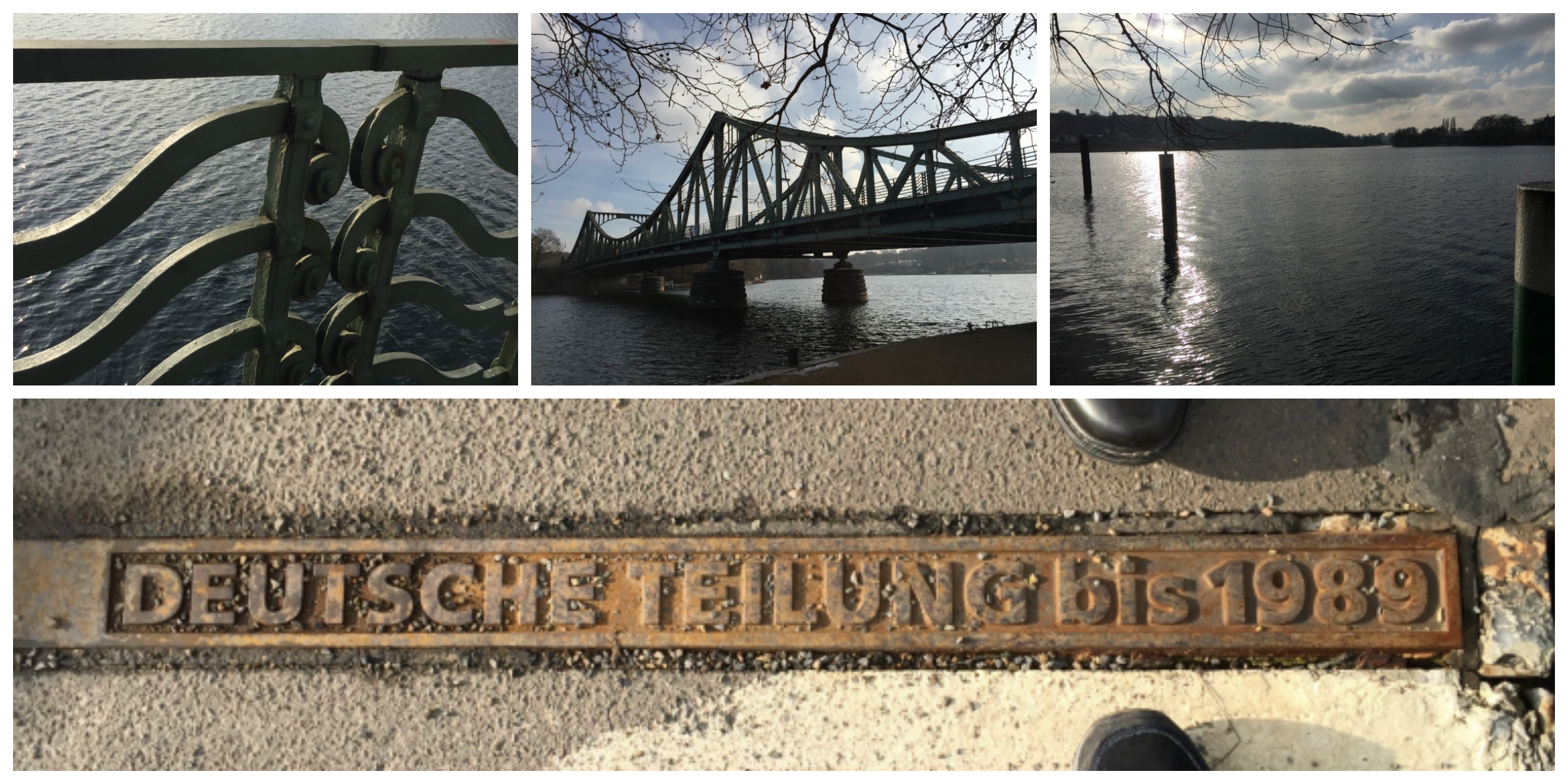
Clockwise from left: detail from bridge railing; bridge from eastern lower side; view over the lake standing by the bridge on western side; centre of the bridge, marked by a metal line saying ‘German division until 1989’.
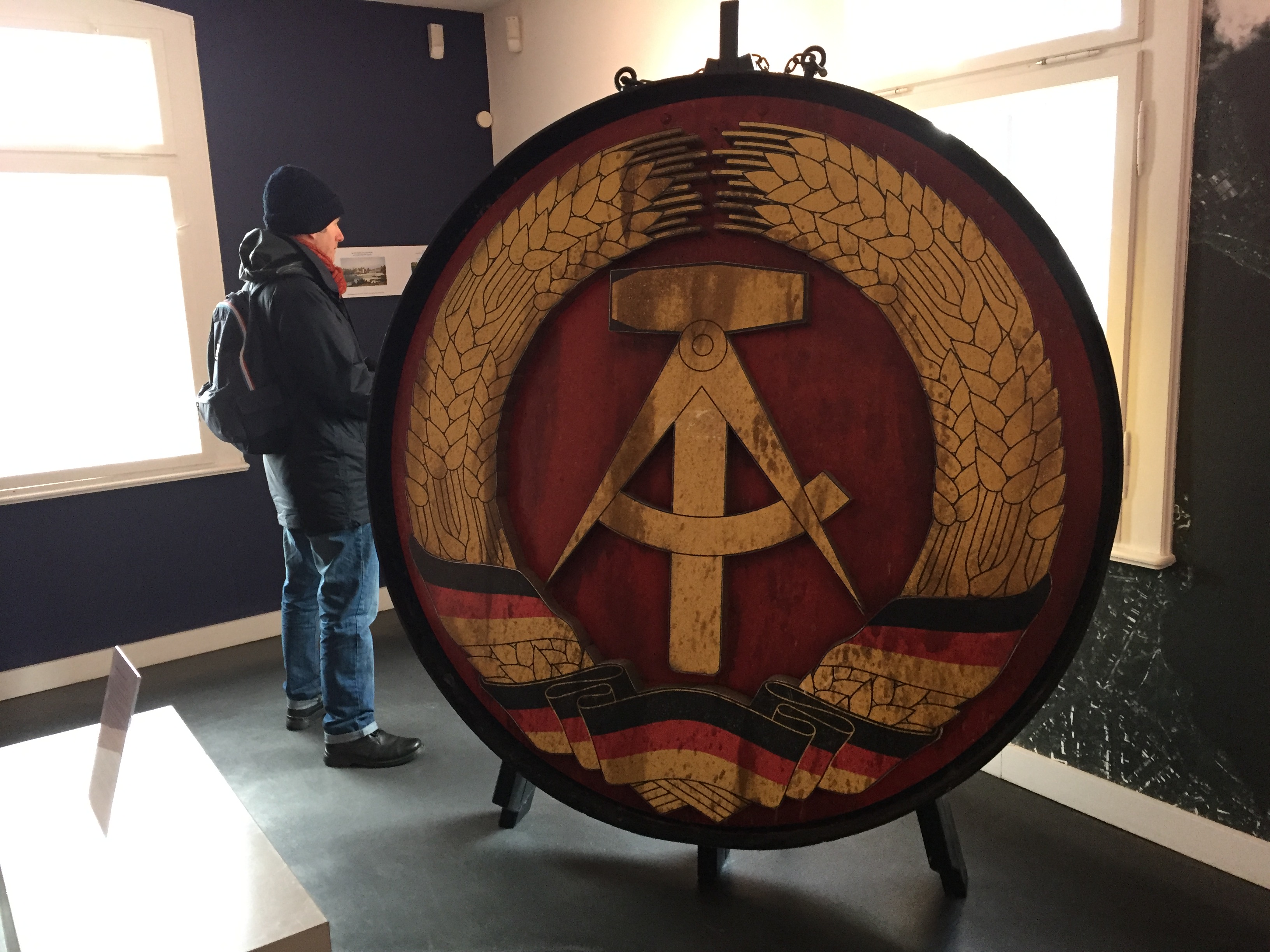
Giant GDR symbol used as a film prop in Spielberg’s The Bridge of Spies. Now in the Villa Schöningen exhibition about the bridge (on the eastern side)
You can read more about the Glienicke Bridge and its spy swaps over at history.com.
To finish off, here’s a selection of the food we hoovered up while in Berlin. Return trip to be scheduled soon.
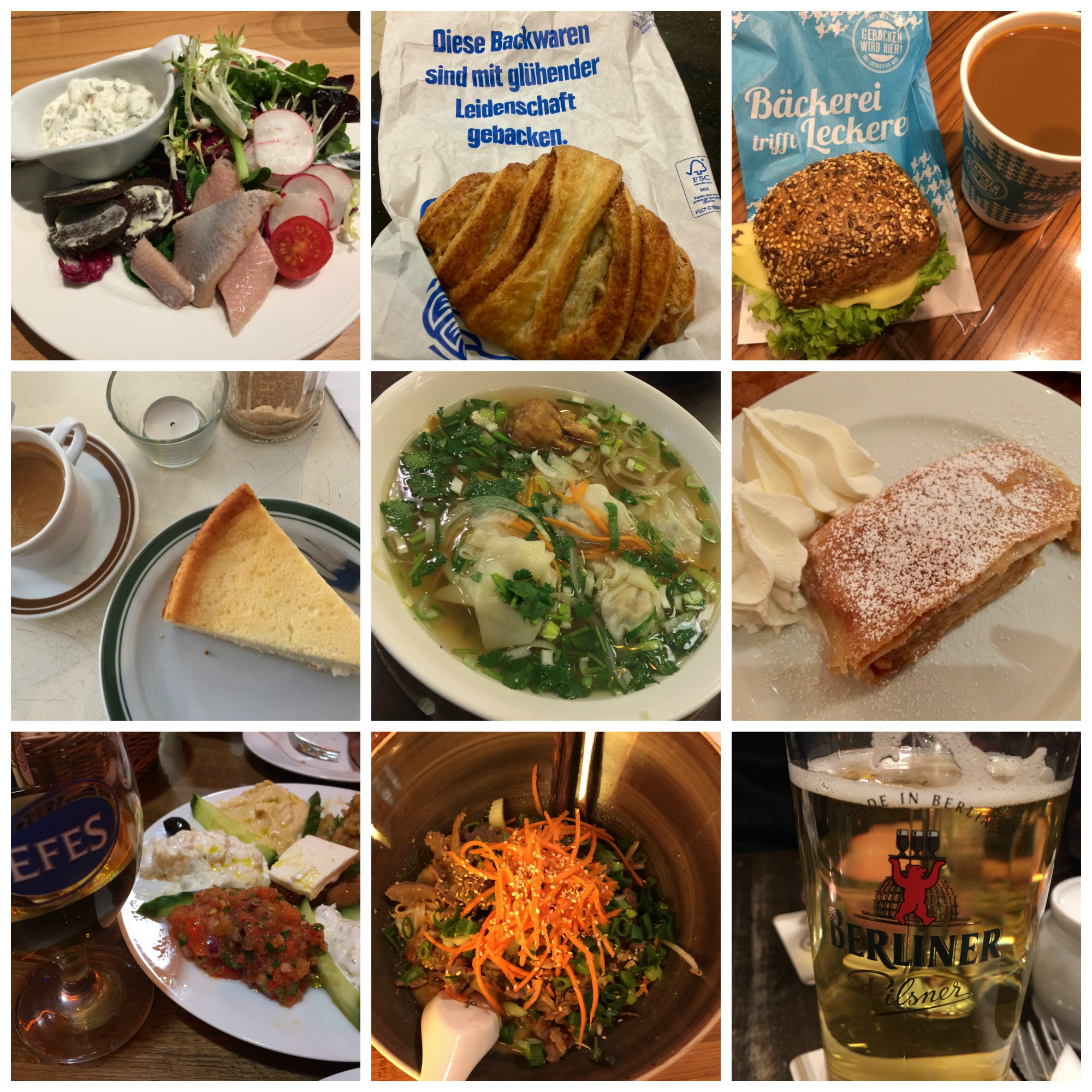
From top left: German herring salad; Franzbroetchen; (divine) roll with cheese; giant portion of cheesecake; Vietnamese won ton; Apfelstrudel with whipped cream; Turkish selection of starters with Efes beer, Vietnamese beef dish with aniseed broth; Berliner Bier
 Mrs. Peabody Investigates