Laura Lippman, Wilde Lake (USA)

Laura Lippman, Wilde Lake (Faber & Faber, 2016)

lippman-wilde-lake

Opening paragraph: “When my brother was eighteen, he broke his arm in an accident that ended in another man’s death. I wish I could tell you that we mourned the boy who died, but we did not. He was the one with murder in his heart and, sure enough, death found him that night. Funny how that works”.

I couldn’t resist quoting the first few lines of Laura Lippman’s Wilde Lake, as they constitute one of the best openings I’ve read in a while. How could anyone not want to read on?

Wilde Lake was my first book of 2017, which I found while browsing Crime Time‘s Top 20 of 2016. One of the reasons I was drawn to it – aside from the opening – was my enjoyment of another Lippman novel, After I’m Gone. Wilde Lake is a similarly engrossing, high-quality crime novel, whose key strength is the depth of its characterisation, and its ability to draw a portrait of family and community life in rich, convincing detail.

The novel is set in Columbia, Maryland, and in some respects pays homage to the author’s childhood home – Lippman grew up there and attended Wilde Lake High School. The narrative has two timelines: the present, in which 45-year-old Luisa (Lu) Brant takes on a murder case in her capacity as the state’s attorney of Howard County, Maryland, and the past (1980 onwards), narrated by Lu herself, which may or may not have a link to present-day events. We’re given an intimate portrait of Brant family life, and in particular the dynamic between Lu’s father, a distinguished attorney, her older brother AJ, and Lu as the only girl and the youngest in the family. There are shades of To Kill a Mockingbird and The Go-Between, where we see child narrators trying to interpret complex adult events to the best of their ability.

Wilde Lake was a thoroughly enjoyable way to start this year’s reading. I found myself being pulled equally into past and present events, and particularly liked the depiction of the capable and complex Lu. There was perhaps one reveal too many in the second half, but the ending was perfectly calibrated and provided plenty of food for thought.

******

Tomorrow’s going to be a tough day for many Americans. Hands across the pond, and remember to take care of yourselves. I’ll just leave this here: ‘Self-care tips for those who are terrified of Trump’s presidency’. It’s a good one to read if you’re going quietly mad about Brexit in the UK too.

I’m off to Berlin for a week, and am looking forward to enjoying spending time in a country that has competent politicians, a grown-up media, and excellent cake. Bis bald!

dsc_1160

Stop to smell the flowers (here are some from Hadrian’s Wall)
Westö’s The Wednesday Club (Finland) and the #EU27Project

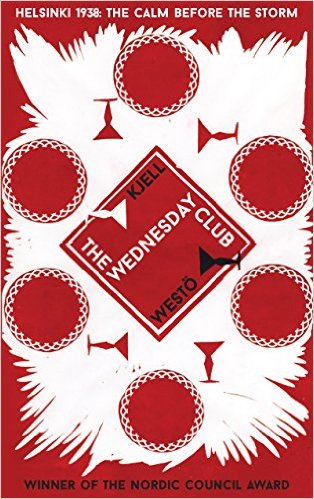
Kjell Westö, The Wednesday Club, tr. from Swedish by Neil Smith (MacLehose, 2016 [2013]). A 2017 Petrona Award entry.

westo-wednesday-club

First line: When Mrs. Wiik failed to turn up for work that morning, at first he felt irritated.

This excellent, multilayered crime novel won the Nordic Council Award in 2014. Set in 1938 Helsinki, it focuses on the members of ‘The Wednesday Club’ – a group of six Swedish-Finnish friends who meet regularly for drinks and conversation – as well as other individuals who are linked to them in various ways.

The novel is the story of how and why a crime is committed rather than a traditional murder mystery. The crime in question – triggered by a chance meeting – can be viewed as a tragic individual story, but also takes on larger symbolic dimensions, as historical crimes of the past, present and future are a major theme. These include the crimes committed at the end of the Finnish Civil War (when socialist ‘Red’ Finns were interned in prison camps), the rise of German and Finnish fascism in the present, as well as National Socialist crimes to come (euthanasia and the persecution of the Jews). Another closely linked theme is that of trauma, which is handled with great sensitivity via the figures of Matilda Wiik and Jary.

1938_helsinki_scandal_race

This photo and race, which ended in a scandal, is incorporated into Westo’s narrative. Thanks to Neil Smith for passing it on.

Reading The Wednesday Club has taught me a lot about Finland, especially its early history. We’re shown a young nation divided by its dual Swedish/Finnish heritage, and by politics and class. Its depiction of 1938 as a moment of great social and political uncertainty also feels resonant now, given that right-wing populism is once again on the rise. The whole novel is beautifully written, and Neil Smith’s translation communicates the measured and occasionally humorous tone of the original extremely well.

The day after finishing this novel, Marina Sofia’s ‘#EU27Project: Reading the European Union’ caught my eye. I’ll definitely be having a go myself, and will use The Wednesday Club as my Finnish entry. To find out more, see Marina Sofia’s post over at Findingtimetowrite. There’s a provisional list of her 27 novels here and you might also find inspiration in this earlier Mrs P post of ’35 European crime novels’.

european-union-map-2013-from-europaeu-e1393721006447

New Year crime fiction treats from Denmark, England, Finland, France, Iceland, Norway and Sweden

Happy New Year to you all!

I hope that 2017 has started well and that you have lots of lovely crime fiction lined up as we move into a new reading year.

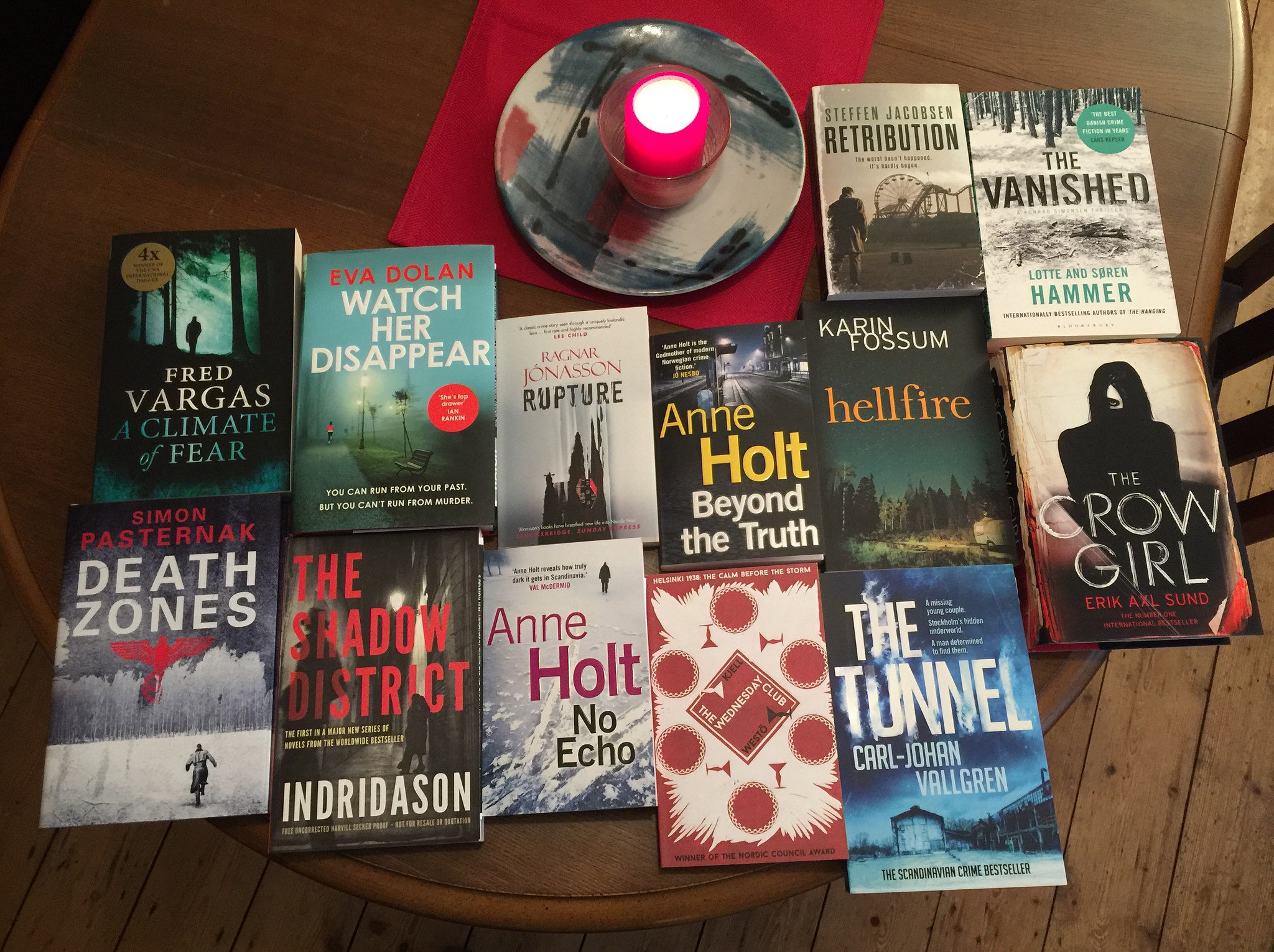
One of the truly splendid things about a crime blogger’s life is being sent lots of fantastic books. The picture below shows my postbag for the last month, which contains some mouth-watering delights.

new-year-treats

As these crime novels come from a variety of publishers, it’s interesting to see how the contents of individual parcels combine. Quite a number in this consignment are entries for the 2017 Petrona Award, which I help to judge along with Barry Forshaw, Sarah Ward and Karen Meek. This explains the high ratio of Scandi crime, including novels by Norwegian crime writing stars Anne Holt (special guest at last year’s CrimeFest) and Karin Fossum. The latter’s ‘Inspector Sejer’ novel The Drowned Boy (Harvill Secker, tr. Kari Dickson) was shortlisted for the 2016 Petrona Award.

Another Petrona entry that’s particularly caught my eye is Finnish author Kjell Westö’s The Wednesday Club (MacLehose, tr. Neil Smith). This novel originally appeared in Swedish (one of Finland’s official languages), is set in Helsinki in 1938, and explores the legacy of the Finnish Civil War. Two of the other novels are set around that time as well (both from Harvill Secker): Danish author Simon Pasternak’s Death Zones (tr. Martin Aitkin / Belorussia in 1943) and Arnaldur Indriðason’s The Shadow District (tr. Victoria Cribb / wartime Reykjavík). The latter is a proof copy and a very exciting bit of post, as it marks the beginning of a new series from this outstanding author (pub. April 2017).

Ragnar Jónasson’s Rupture (Orenda, tr. Quentin Bates), the latest in the ‘Dark Iceland’ series, is also one I’m very much looking forward to reading: it features a cold case from 1955, which sounds right up my street. Other delights include the latest Eva Dolan and Fred Vargas novels (Harvill Secker), Watch Her Disappear and A Climate of Fear (tr. Siân Reynolds). Both Dolan and Vargas are excellent writers, albeit with extremely different styles and authorial concerns.

Lastly, there’s been quite a lot of talk about Erik Axl Sund’s The Crow Girl (Harvill Secker, tr. Neil Smith). It features a highly unusual female protagonist and is definitely not going to be a boring read…

So, that lot’s going to keep me busy for a while.

Which crime novels are you particularly looking forward to reading in January?