Tasty treats: Sherlock Holmes, Chinese crime, John le Carré and some publishing news

All sorts of interesting bits of crime news have come my way in the last couple of weeks…and are now gathered here for your delectation.

sherlock

A three-volume collection of over 60 new Sherlock Holmes stories appeared on 1st October, edited by David Marcum (MX Publishing). As well as being an absolute feast for Holmes fans, the collection supports a brilliant cause: all royalties will be used to fund preservation projects at Sir Arthur Conan Doyle’s former home, Undershaw. You can read more details of how the Undershaw rescue mission and new collection came about – a heady tale of determined fans, thwarted property developers and support from Mark Gatiss (co-creator of the TV drama Sherlock) – in this Radio Times article.

Thanks to Martin Rosenstock for alerting me to the new Sherlock adventures. Martin is one of the authors featured in the collection, and has also contributed an excellent chapter on Swiss crime fiction to our forthcoming Crime Fiction in German volume. In fact, he opens that chapter with a reference to Sherlock Holmes’ apparent demise at the Reichenbach Falls in Switzerland, creating a rather lovely virtuous circle!

WU-Alum-Qiu-Xiaolong-book-covers-2

Chinese President Xi has been on the receiving end of a charm offensive during his recent visit to the UK, as various deals are sealed including a 25 billion pound nuclear power station at Hinckley Point in Somerset. So I was very interested to see this piece by Bruce Jacobs, entitled ‘Qiu Xiaolong’s Detective Chen novels give clues to unravelling the mysteries of China‘. I read the first in the Chen series, Death of a Red Heroine, a good while ago, and remember liking it, but hadn’t realised that there are now nine in the series. Jacobs shows how the Chen novels give ‘excellent insights into China from the time of Mao Zedong and the Cultural Revolution to the present’, and, as the covers above indicate, explore the interaction of the ‘old’ and ‘new’ Chinas. Thanks to Craig Sisterson for posting this piece on Facebook.

John le C

Regular readers to this blog will know that I am a huge John le Carré fan – you can read my appreciation of his novels here. A major new biography by Adam Sisman has just been published by Bloomsbury, which examines le Carré’s life and his career as a spy and writer in detail. There’s a long piece by Sisman in The Guardian today entitled ‘From cold war spy to angry old man: the politics of John le Carré’, which explores how the author’s political views have become more left-wing over time. Sisman uses a great German term to account for this – Alterszorn (the rage of age) – and provides some excellent insights into a number of le Carré’s novels. Well worth a read.

Untersetzer_100mm_04

‘My emergency plan: A Prosecco to wake up. Then an expresso with a shot. Around eleven, the first beer. And so on in stages’. Yours, Aunt Poldi

And finally, some publishing news generated by the Frankfurt book fair:

  • No Exit Press has acquired The Harbour Master and Night Market by Daniel Pembrey. They are the first and second installments of ‘The Amsterdam Quartet’ featuring police detective Henk van der Pol.
  • Bitter Lemon Press has acquired the English-language rights to the hilarious German crime novel Aunt Poldi and the Sicilian Lions, which will be published in 2016. Author Mario Giordano will be in London on 10th November at the Goethe Institut to talk about the book. It’s a free event – for further details see here.
  • Orenda Books has secured a three-book deal for Michael Stanley’s Detective Kubu Botswana crime novels Deadly Harvest, A Death in the Family and Dying To Live.
  • And Orenda has also acquired World English Language rights for Norwegian crime writer Thomas Enger’s next two titles in the ‘Henning Juul’ series, Coat of Arms and Mortal Wound.
Marlon James wins 2015 Man Booker Prize for A Brief History of Seven Killings

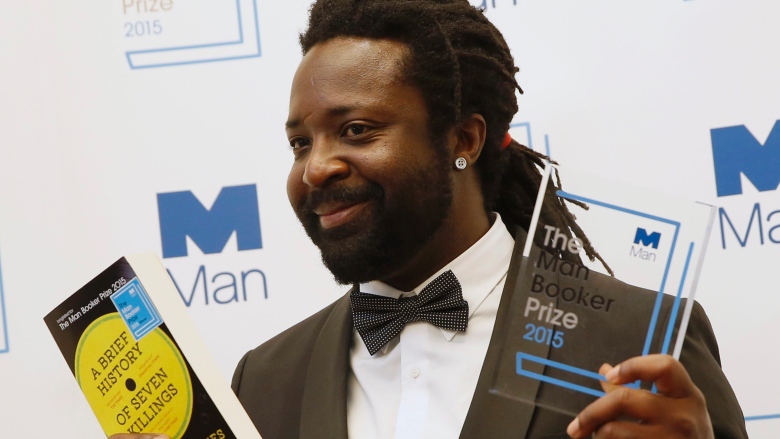
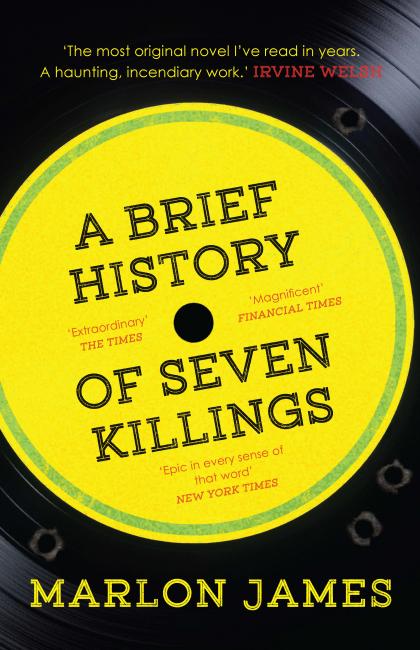
It’s rare that I post twice in one week, but I couldn’t let the news pass that a Jamaican literary crime novel has won the 2015 Man BookerMarlon James’ A Brief History of Seven Killings (OneWorld).

Marlon James-A Brief History of Seven Killings

It’s the second time in recent years that a novel featuring strong elements of crime has won the prize – the other being Eleanor Catton’s The Luminaries in 2013. It’s also the first time a Jamaican author has won the prize in its 47-year history.

I picked up A Brief History of Seven Killings in the summer without realising it was a contender for the Man Booker. At that point I was simply intrigued by the novel’s title, its striking cover, and the central event it examines – the attempted murder of reggae superstar Bob Marley in Jamaica in 1976. Here’s the Man Booker summary of the novel to give you an idea of its scope:

>> On 3 December 1976, just weeks before the general election and two days before Bob Marley was to play the Smile Jamaica concert to ease political tensions, seven men from West Kingston stormed his house with machine guns. Marley survived and went on to perform at the free concert. But the next day he left the country and didn’t return for two years.

Inspired by this near-mythic event, A Brief History of Seven Killings takes the form of an imagined oral biography, told by ghosts, witnesses, killers, members of parliament, drug dealers, conmen, beauty queens, FBI and CIA agents, reporters, journalists, and even Keith Richards’ drug dealer. The story traverses strange landscapes and shady characters, as motivations are examined – and questions asked. <<

22148764882_9bcffebe57_z

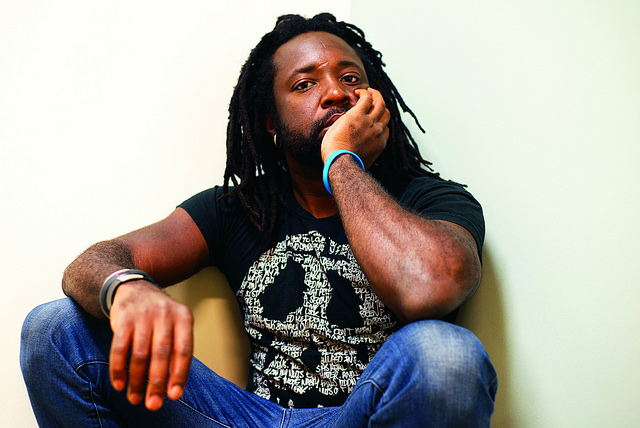
Marlon James by Jeffrey Skemp (Man Booker Prize)

I’m about half way through the novel at the moment and am finding it a rich and challenging reading experience – in the best possible sense:

  • It’s anything but a ‘brief history’. The novel is 686 pages long and features over 75 characters, fifteen of which have narrative voices. There’s a helpful ‘cast of characters’ at the beginning that’s four pages long.
  • The opening chapter secured my attention right away. It’s narrated by a dead man: murdered former politician Sir Arthur Jennings (‘nobody falls that way without being pushed’). Criminal acts and criminality are at the heart of the novel.
  • The first three sections are set in Kingston, Jamaica, and show life in the ghetto, offering a brilliant, but *extremely* hard-hitting depiction of how grinding poverty, gang violence and political turbulence are entwined. Many of the narrators use Jamaican patois and have a stream of consciousness style, which may take a little while to get used to, but is rewarding once you do.
  • The novel illuminates race, class and gender relations via a number of characters, including a gay gang member and a young woman who had a brief liaison with ‘The Singer’. I’m particularly looking forward to seeing where Nina Burgess’ story goes. You can read an extract from one of her chapters here.
  • And then of course there’s the world of ‘The Singer’, his possibly naive attempts to intervene in politics, and the stories of the men who attack him, which are the novel’s principal structuring device.

britain-booker-prize

Here’s a selection of articles on the author and the novel:

Craig Sisterson, ‘Crime Novel wins Man Booker!‘, Crime Watch blog: an exploration of the novel’s crime credentials and reactions to the win.

Nicholas Blincoe reviews the novel for The Telegraph and compares it to James Ellroy’s LA Quartet. Warning: contains spoilers, but also helpful information about the historical and political contexts in which the novel is set.

Paula Cocozza, ‘Man Booker Winner Marlon James’: ‘I was the nerd, I wasn’t into sports, assumed gay’The Guardian. Profile of the author, which notes that the novel was rejected 78 times before securing a publishing deal.

Michiko Kakutani, ‘Jamaica via a Sea of Voices’New York Times, in which the novel is described as being ‘like a Tarantino remake of “The Harder They Come” but with a soundtrack by Bob Marley and a script by Oliver Stone and William Faulkner, with maybe a little creative boost from some primo ganja’.

Tim Martin, A Brief History of Seven Killings is violent, shocking – and a worthy winner of the 2015 Man Booker Prize’, The Telegraph. Again, comparisons are made to Ellroy: ‘Following Ellroy, it involves itself deeply in the intricate plotlines of the crime genre’.

In sum, an extraordinary novel, and it’s wonderful to see it win such a major literary prize.

Smörgåsbord: New BBC crime (River, Arne Dahl) & German Histo-Krimis

There are some tasty morsels on offer this week…

WARNING: Embargoed for publication until 04/08/2015 - Programme Name: River - TX: n/a - Episode: River - First Look (No. n/a) - Picture Shows: EMBARGOED UNTIL 00:01HRS, TUESDAY 4th AUGUST, 2015 John River (STELLAN SKARSGARD) - (C) Kudos - Photographer: Nick Briggs

John River (STELLAN SKARSGARD) – (C) Kudos – Photographer: Nick Briggs

Tonight (Tuesday 13 October, 9.00-10.00) sees the start of an intriguing new six-part crime drama on BBC One.

River is set in London, but stars well-known Swedish actor Stellan Skarsgård as police officer John River – just the latest evidence of the mark Scandinavia is making on our crime culture. The series is a police procedural with a twist, because it seems that River is able to commune with the dead, including his former colleague ‘Stevie’ Stevenson (played by Nicola Walker, who’s also the police lead in Unforgotten over on ITV at the moment). I’m very interested to see how the excellent Cardiff-born screenwriter Abi Morgan pulls this idea off, which we see surfacing in crime series every now and then – the 1969/70 TV series Randall and Hopkirk (Deceased) springs to mind, as do the historical crime novels of Maurizio de Giovanni, featuring Commissario Riccardi. The image of detectives haunted by the victims of cases they haven’t yet managed to solve is a very powerful one, and in the hands of these actors, could be very effective indeed.

There’s a nice interview with Stellan Skarsgård by Jake Kerridge in today’s The Telegraph.

UPDATE: I’ve just watched Episode 1 and am VERY excited. This is one of the best British crime dramas I’ve seen in a long time (probably since Happy Valley). It has a hugely original premise, which is flawlessly executed, and the writing and acting are both top-notch. The opening, which involves an ABBA reference, Tina Charles’ ‘I Love to Love’ and a gritty chase scene, had me completely gripped, and if anything, things just got better from there. Skarsgård is particularly good, projecting an almost tangible sense of grief following the loss of his colleague Stevie, but there are a number of other great characters too, from Stevie herself to River’s no-nonsense boss and new partner Ira (look out for a breathtakingly audacious quip after they are introduced). The cinematography and styling are also wonderful: London takes on a Bladerunner feel in places and there is a striking use of colour (reds, greens and blues in particular). Original – stylish – brilliantly written and acted: make sure you watch this SOON.

Arne-Dahl-Series-2-cast

The A-Unit team, series 2

Over on BBC Four, Beck is making way for Arne Dahl, which starts on Saturday, 17. October at 9.00. This is the second series about the Swedish A-Unit – an ensemble police drama with a number of quirky characters, including a new team-member I’m pleased to see is a languages expert. I have to confess that I never completely got into series 1, but know that plenty of viewers did. The first episode involves the murders of a number of Polish women and is in Swedish and Polish with subtitles. In it, we also see Kerstin Holm take up her new role as A-Unit leader.

bj

Lastly, historical crime fans may be interested in a piece that Marina Sofia and I have written about German Histo-Krimis over at ‘Crime Fiction Lover. Our flimsy cover was a celebration of the Oktoberfest (cue naff picture of Bier maidens), but what we really wanted to do was tell everyone about the MASSES of great historical crime fiction that’s been produced in Germany, Austria and Switzerland, especially since reunification. Some of the novels are already in translation, others are not (needless to say, we’re working hard on getting the latter published in English…).

Henning Mankell, 1948-2015

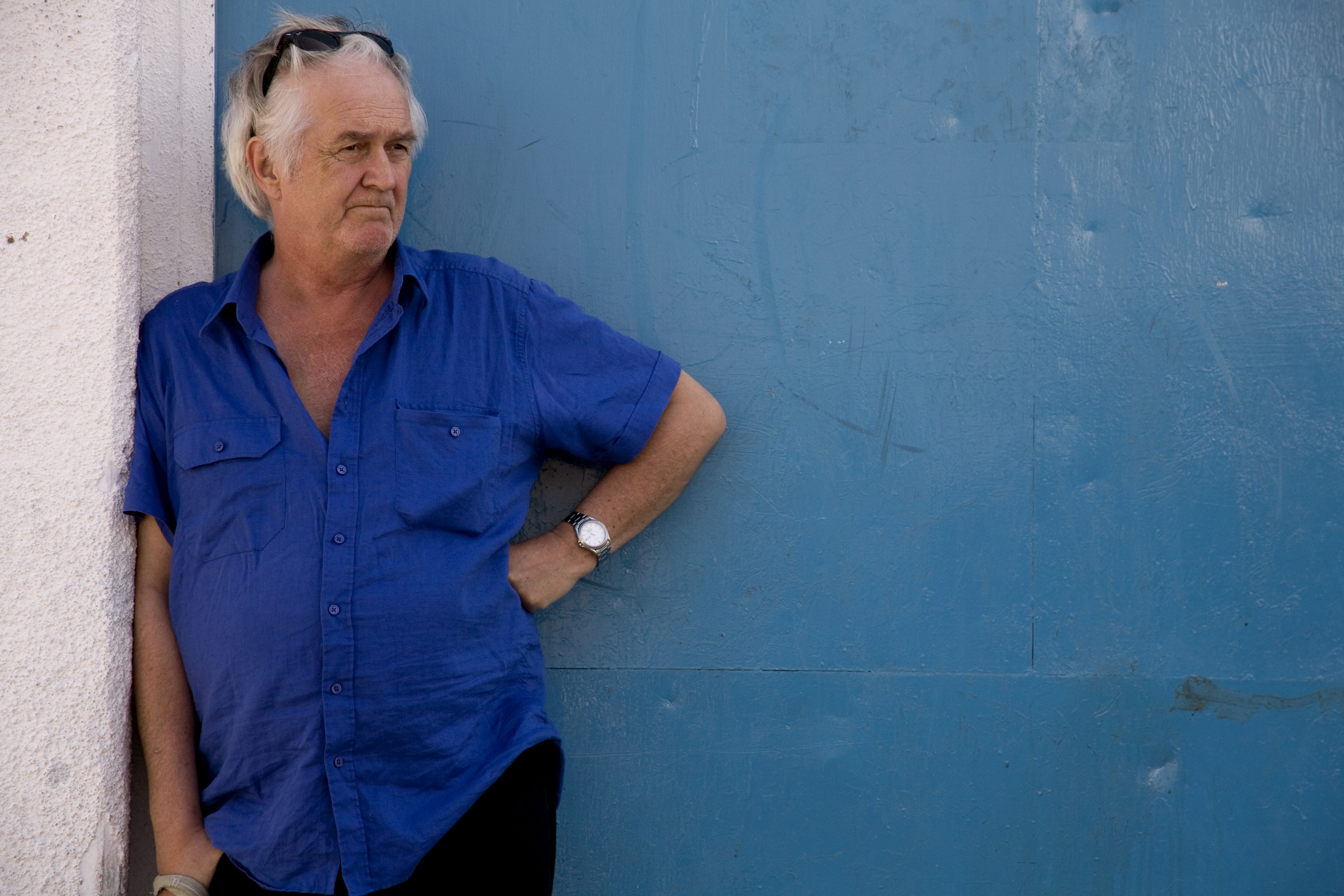
Some extremely sad news today. Swedish crime author Henning Mankell has died at the age of 67. 

HenningMankellBethlehem

Mankell is of course best known for his ‘Kurt Wallander’ police procedural series, set in the small town of Ystad in southern Sweden. Aside from its high quality and the wonderfully complex characterisation of Inspector Wallander, the series is marked by its social conscience, a deep empathy for others, and an outward-looking view, which connected Ystad with Europe and the rest of the world, most notably Africa, a continent Mankell loved and where he spent a great deal of time. The series was and remains ground-breaking, tackling subjects such as xenophobia, violence, terrorism, the globalisation of crime and the historical legacies of the twentieth century. It is rightly viewed as one of the great series in international crime fiction – elegantly bridging Sjowall and Wahloo’s 1970s ‘Beck’ series and more recent Nordic Noir such as Indridason’s ‘Reykjavik’ novels.

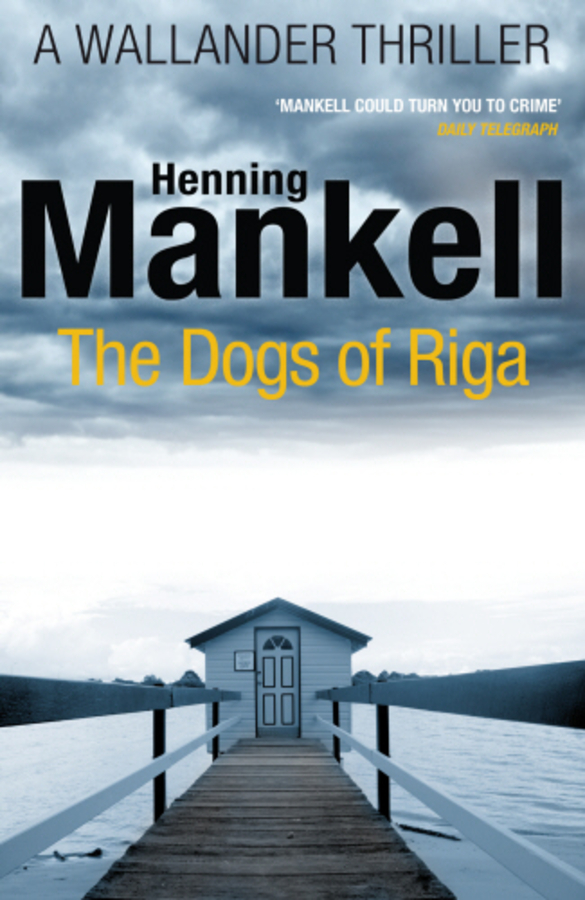
The-Dogs-of-Riga

There are ten Wallander novels. Here they are with their original date of publication and their atmospheric opening lines.

Faceless Killers (1990). ‘He has forgotten something, he knows that for sure when he wakes up. Something he dreamt during the night. Something he ought to remember.’

The Dogs of Riga (1992). ‘It started snowing shortly after 10am. The man in the wheel-house of the fishing boat cursed. He’d heard the forecast, but hoped they might make the Swedish coast before the storm hit.’

The White Lioness (1993). ‘Louise Akerblom, an estate agent, left the Savings Bank in Skurup shortly after 3.00 in the afternoon on Friday, April 24.’

The Man who Smiled (1994). ‘Fog. A silent, stealthy beast of prey. Even though I have lived all my life in Skane, where fog is forever closing in and shuttering out the world, I’ll never get used to it.’

Sidetracked (1995). ‘Just before dawn. Pedro Santana woke. The kerosene lamp had started to smoke. When he opened his eyes, he didn’t know where he was’.

The Fifth Woman (1996). ‘The letter arrived in Ystad on 19 August 1993. Since it had an African stamp and must be from her mother, she hadn’t opened it immediately. She wanted to have peace and quiet to read it.’

One Step Behind (1997). ‘On Wednesday, 7 August 1996, Kurt Wallander came close to being killed in a traffic accident just east of Ystad.’

Firewall (1998). ‘The wind died down towards evening, then stopped completely. He was standing on the balcony. Some days he could see a sliver of ocean between the buildings across the way.’

The Pyramid (1999). ‘In the beginning, everything was just a fog. Or perhaps it was like a thick-flowing sea where all was white and silent. The landscape of death.’

The Troubled Man (2009). ‘The story begins with a sudden fit of rage. The cause of it was a report that had been submitted the previous evening, which the prime minister was now reading at his poorly lit desk.’

Huge thanks are due to the translators who brought us the Wallander novels and expertly translated the lines above: Steven T. Murray, Ebba Segerberg and Laurie Thompson.

K wallander

Further links (I will keep adding to these – if you find good ones, do leave them in the comments section below).

I’m off to liberate some Aquavit from the back of the drinks cupboard and to watch an episode of Wallander with Krister Henriksson…