Stop Press! BBC Four announces autumn Scandi dramas: Beck, The Bridge and Arne Dahl

UPDATES: The first episode of Beck aired on Saturday 12 September at 9pm on BBC4. My review of ‘Buried Alive’ (no major spoilers) is available here.

Beck has now finished. Arne Dahl begins on Saturday, 17. October at 9.00.

The start date for The Bridge 3 is Saturday 21. November (9pm; double episode). Mrs P blog post and trailer available here.

Series 2 of The Young Montalbano starts on Saturday 2. January 2016. More info available here.

                                                                   ************

BBC Four’s Channel Editor Cassian Harrison made some exciting crime drama announcements at the Edinburgh TV festival today. Below is an extract from the BBC4 press release:

>> BBC Four brings viewers an autumn of gripping Scandinavian drama with the return of the hugely popular The Bridge (the final episode of the last series was enjoyed by over 1.5m viewers) and Arne Dahl, as well as the launch of new crime thriller Beck.

beck

Beck: Based on the characters of the hugely popular Martin Beck detective series of novels by Swedish husband-and-wife writers Maj Sjöwall and Per Wahlöö, Beck sees the much-loved detective brought to life on the small screen. Following the fortunes of enigmatic and extremely methodical detective Martin Beck and his partner, the irascible, impulsive Gunvald Larsson, Beck is arguably the originator of what has become known as Scandinavian crime: the good-cop, bad-cop partnership which went on to form the modern crime-fighting blueprint.

The brand-new feature-length films see detective Martin Beck investigating the shocking death of a young woman found strangled in a hotel room, a gangster kingpin executed by a sniper in front of his family, a terrorist attack and a suspicious hospital death which sourly turns out to be premeditated murder. It’s an intricate web of characters and lies. Think again. The killer is never who you expect it to be.

Starring Peter Haber (The Girl With The Dragon Tattoo) as Beck and Mikael Persbrandt (The Hobbit: The Desolation Of Smaug) as Larsson, the drama’s combination of complex woven details of police detection and beautifully realised characters combined with twisting, masterful storylines has ensured that the award-winning series won fans and acclaim from around the world.

broen

The Bridge 3: When Helle Anker, the founder of the first gender-neutral kindergarten in Copenhagen and a high-profile debater on gender issues, is found murdered in Sweden, the Danish and Swedish police are compelled to join forces once more for a third series of The Bridge. The brutal killing turns out to be only the first in a series of gruesome crimes, strung together in a case which involves Saga Norén of the Malmo Police personally and which will change her forever. A powerful, intriguing and unpredictable tale of crime, played out by fascinating and complex characters, the new season will revolve around the concept and structures of family – new, old, deviant, classical, constructive and destructive. At its heart, The Bridge carries a central theme of personal responsibility and its consequences.

dahl

Arne DahlThe Swedish crime drama returns with five new stories. The A Unit has been disbanded for the past two years. When a wave of brutal murders hits Polish nurses in Sweden, the National Police see their chance to reinstate the The A Unit, and Kerstin Holm, previously a member of the team, is assigned to lead them.

We meet a chastened team of individuals who have allowed the all-consuming nature of their police work to eat away at their private lives. Demands and expectations have never been higher and a cold wind blows through the corridors at the National Police head-quarters. Can Kerstin get the unit to deliver, or is this new effort a misguided attempt by a paranoid police force in a time of increasingly unusual and refined criminal activity?

It is produced by Filmlance International AB in co-production with Sveriges Television and ZDF Germany, written by Erik Ahrnbom, Linn Gottfridsson, Peter Emanuel Falck and Fredrik Agetoft, adapted from the novels by Arne Dahl.<<

This is all very fitting on the day that sees the UK publication of the fourth in Stieg Larsson’s Millennium series, The Girl in the Spider’s Web, authored by David Lagerkranz (it’s out in the US on 1st September). Reviews appear to be pretty favourable thus far, as this example by The Telegraph‘s Jake Kerridge shows. So glad to see Salander living to fight another day.

The-Girl-in-the-Spiders-Web-promo

Eva Dolan’s Long Way Home, the Kappe historical ‘Kettenroman’ (chain novel) and some other tasty bits

What do you do when your TBR pile is so vast it defies all hope of control? Answer: give up and read what you want.

long-way-home-pbk

In that spirit, I picked up Eva Dolan’s Long Way Home (Vintage, 2014). Lots of people had told me about this debut and as soon as I started reading, I could see that the praise for the novel was justified: it’s a beautifully written police procedural, which explores migrant experiences in the UK in a realistic and very sobering way. Its main investigative protagonists, Detectives Zigic and Ferreira of the Peterborough Hate Crimes Unit – with Serbian and Portuguese heritage respectively – are both extremely well drawn, and the story, which starts with the discovery of a body in a burned-out garden shed, is gripping and believable. It’s a hugely accomplished first novel, and I’m already looking forward to the second in the series, Tell No Tales.

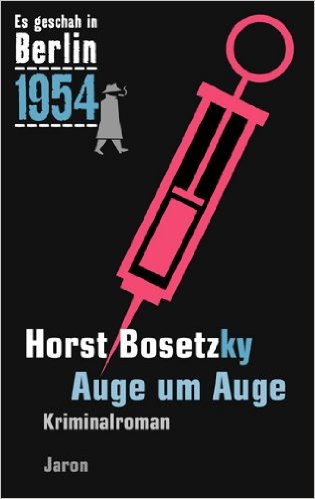
While researching my article on post-war justice in crime fiction this week, I came across the German crime novel Auge um Auge (Eye for an Eye), which explores how doctors involved in medical crimes under National Socialism often went unpunished.

kappe auge

Auge um Auge is part of a remarkable historical crime series called ‘Es geschah in Berlin’ (‘It happened in Berlin’), which uses the cases of policeman Hermann Kappe to trace German history from 1910, before the collapse of the German empire, through to the Cold War era. To date, there are 26 novels set at two-year intervals from 1910 to 1960 (nephew Otto Kappe takes over the investigative reins in 1956):

kappe collection jaron

The image above shows how the novels are packaged, with the series title and year highlighted on the cover, together with a striking abstract design. It also shows that the novels – rather unusually – are written by a collective of authors. Horst Bosetzky, a well known German crime author since the 1960s, conceived the series in 2007 with publishing house Jaron, and the other writers work under his overall guidance.

The series has also been called a Kettenroman or ‘chain novel’, which is a neat term. At the moment, ‘Es geschah in Berlin’ is the most ambitious use I’ve seen of a crime series to ‘investigate’ twentieth-century German history and I’ll definitely be checking out the other novels. Hopefully they’ll make their way into translation too.

In other news:

I’ve been flying the flag for German crime in the Times Literary Supplement, with a review of a fascinating volume called TATORT GERMANYThe Curious Case of German-Language Crime Fiction (Camden House), which is edited by Lynn M. Kutch and Todd Herzog. Unfortunately the review’s behind a paywall, but I bought a copy of the TLS yesterday, and was delighted to see a whole page dedicated to German literature.

tatort germany

Most interesting find of the week: a 2015 Penguin Special by Erich Schlosser called Gods of Metal, an essay exploring America’s nuclear capacity and the frightening ease with which a high-security weapons complex in Tennessee was breached in 2012. Schlosser meets members of the Plowshares movement, who break into nuclear facilities as a form of civil protest, and are subsequently branded as criminals by the state. Thought-provoking stuff, timed to coincide with the 70th anniversary of Hiroshima.

gods of metal

True Detective 1, Top of the Lake 2, Y Gwyll/Hinterland 2

The title of this post may look a bit like a line of football scores, but as you’ve probably guessed, the numbers denote the seasons of the crime series being discussed…

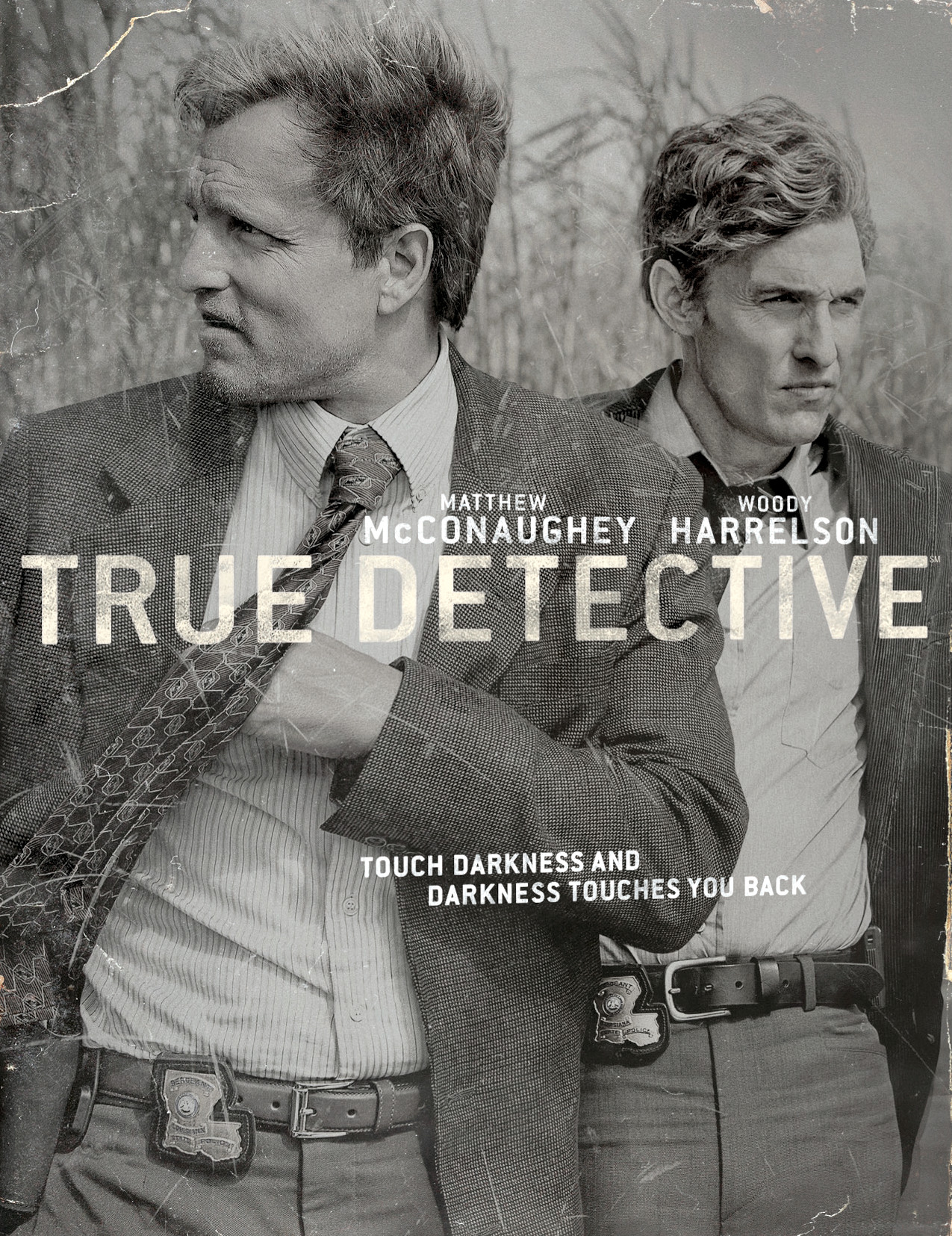
So…I know I’m late to the party, but I’ve *finally* managed to watch the box set of True Detective 1 (HBO 2014) that’s been sitting on my shelf for over a year. And what a treat it turned out to be – grown-up, complex crime drama at its absolute best.

The-DVD-cover-for-True-Detective

There was so much to like: the complex characterisation of Louisiana state police detectives Marty Hart and Rust Cohle, the absorbing interview/flashback structure, the stunning cinematography, the Deep South gothic-noir mood, and of course, that iconic title sequence featuring The Handsome Family’s ‘Far From Any Road’.

I watched the series with my son, and we were both impressed with the consistently high standard of the eight episodes. We ended up rationing them to one an evening, because each was such a rich viewing experience that we wanted to dissect them afterwards. While the investigation – into the ritualistic murder of a woman and the earlier disappearance of a child – was extremely compelling, what lingered in my mind was the story of Marty and Rust’s own development and the evolution of their relationship over a period of twenty years. Their characters were very different, with individual complexities and flaws, and were brilliantly brought to life by actors Matthew McConaughey and Woody Harrelson.

I particularly loved Rust’s tenacity (bordering on worrying obsessiveness) in refusing to let the case die. Here he is scouting a site for clues with his ‘taxman’ notebook.

true-detective-2

I hear that True Detective 2 hasn’t (ahem) quite lived up to expectations, so if you haven’t yet seen True Detective 1, now could be the moment to check it out. It will stand the test of time as a standalone series, I’m sure.

Some very good news: a second series of Top of the Lake has been commissioned by BBC2, with Elizabeth Moss reprising her role as Detective Robin Griffin.

toplake-700x400

There’s a major change of location, though: season 2 will be shot and set in Sydney, Australia and Hong Kong rather than New Zealand. I admit to having slightly mixed feelings about this, as the New Zealand setting was one of the big strengths of the first series for me. On the other hand, Jane Campion and Gerard Lee are once again co-writing, with Jane also set to co-direct, so I’ll be watching come what may. Production begins in December.

There’s further information about season 2 at indiewire and if.com.au. My earlier post on the first series of Top of the Lake (2013) and its wonderful female protagonists is available here.

And finally… The second series of Welsh crime drama Y Gwyll/Hinterland will air on British screens in mid-September:

ygwyll-2series

WalesOnline reports: >>The ground-breaking crime drama, starring Richard Harrington as DCI Tom Mathias, will premiere in Welsh, with optional English subtitles, on S4C in the prime drama slot of 9pm on Sunday nights. The first episode of the eight-part series starts on September 13 and Mathias’ wife Meg turns up, hopefully revealing some of the moody detective’s shady past <<.

And here’s a nice little article by Kathryn Williams on ‘5 Things to Expect from Y Gwyll / Hinterland Series 2′. It looks like we’ll be finding out a lot more about both Mathias and Mared Rhys, which is a welcome development. While series 1 was great, a few people (myself included) thought a bit more backstory on the key investigators would have been good (see my earlier post here).

The English-language version will be shown on BBC Cymru Wales and BBC4 at a later date. Riches galore.

Calling the hive mind! Looking for crime novels that feature Nazi war-crimes trials

***If you have a spare minute, I’d be really grateful for your help***

I’m currently writing up a journal article on war crimes trials in Nazi-themed crime fiction. I’m interested in how crime novels since 1945 represent war crimes trials in relation to larger debates about their judicial, social and moral value, and to what extent they show legal justice as succeeding or failing.

Legal_scale-300x270

I’ve identified around 50 Nazi-themed novels that focus extensively on the theme of post-war justice, but only a much smaller number that depict or discuss war crimes trials. So the question is, can you help me find more? Here’s what I’ve got at the moment:

Crime novels (and films) containing depictions of Nazi war crimes trials:

  • William Brodrick, The Sixth Lamentation. London: Time Warner, 2004 [2003].
  • Gordon Ferris, Pilgrim Soul. London: Atlantic 2013.
  • David Thomas, Ostland. London: Quercus, 2013.
  • Joseph Kanon, The Good German. London: Time Warner, 2003 [2001].
  • Judgement at Nuremberg, dir. Stanley Kramer, 1961.
  • Music Box, dir. Constantin Costa-Gavras, 1989.
AAA ostland

This novel explores the case of Georg Heuser and his 1963 trial in West Germany

Others that feature discussion of Nazi war crimes trials include:

  • Frederick Forsyth, The Odessa File. London: Arrow, 2003 [1972].
  • Gerhard Harkenthal, Rendezvous mit dem Tod [A Date with Death]. Berlin: Buchverlag der Morgen, 1962.
  • Edgar Hilsenrath, Der Nazi & der Friseur [The Nazi and the Barber]. Munich: Piper, 2000 [1977].
  • Ira Levin. The Boys from Brazil. New York: Dell Publishing, 1976.
  • Brian Moore, The Statement. London: Flamingo, 1996 [1995].
  • Ian Rankin, The Hanging Garden. London: Orion, 1998.
  • Ferdinand von Schirach, Der Fall Collini [The Collini Case]. Munich: Piper, 2011.

Can you think of any others? They can be from anywhere in the world and don’t necessarily need to be in translation. Thanks in advance for your help 🙂