WELSH crime drama Y Gwyll / Hinterland

Hinterland will be shown again on BBC4 from Monday 28 April 2014. See below for information about the series and a spoiler-free review of Episode 1.

****************

There’s been lots of buzz recently about the new Welsh crime drama Y Gwyll / Hinterland, which debuts at 9.30pm, next Tuesday, 29th October on S4C Digital. (In case you’re wondering, S4C stands for Sianel Pedwar Cymru or ‘Channel Four Wales’, and is also available beyond Wales via satellite, cable, and online).

My ears pricked up when I heard about this Fiction Factory/S4C/BBC production, partly because I have the good fortune to live in Wales, and partly because of its strong Scandinavian connections. Pre-broadcast coverage has repeatedly emphasised the influence of crime dramas such as The Killing and Wallander on Y Gwyll, both in terms of its tone – think Scandi melancholy and bleakly beautiful landscapes – and in terms of the decision to film it in Welsh with English subtitles. It’s a gentle reminder that languages other than English are spoken in the UK, and provides a wonderful showcase for Welsh language and Welsh culture, especially that of west Wales, which has a high proportion of Welsh-speakers.

I’m sure the enormous success of the ‘subtitled homicide genre’ in the popular BBC4 Saturday crime slot played a sizable role in convincing telly execs that this fairly costly venture (£4.2 million) would prove worthwhile. The series has also been filmed in English, and will air on BBC Wales and BBC4 next year, but I’ll definitely be watching the Welsh version first, and am hugely looking forward to some quality Cymru Crime.

In a lovely twist, the series has already been sold to the Danish channel DR, which means that we’re exporting some Scandi-style subtitled drama back to Denmark. Expect to see lots of Danish tourists flocking to the seaside town of Aberystwyth soon.

Here’s a bit more about Y Gwyll from the Fiction Factory website:

> From the windswept sand dunes of the coastline to the badlands of the hinterland, Aberystwyth is the perfect setting for this brand new drama series. A place that lives by its own rules: a natural crucible of colliding worlds where history and myth meet the modern and contemporary. Into this world steps DCI TOM MATHIAS (Richard Harrington), a brilliant but troubled man. Having abandoned his life in London, he isolates himself on the outskirts of Aber – a town filled with secrets as dark and destructive as his own.

MATHIAS is partnered with DI MARED RHYS (Mali Harris). Intelligent and complex, she is a mother wiser than her 33 years suggest. Together, enigmatic outsider Mathias and hometown girl Mared form an engaging relationship.

MATHIAS is at the heart of every story. He is a man we instinctively trust, a man who knows that the key to solving the ultimate crime of murder lies not in where you look for truth, but how you look. From the windswept sand dunes of the coastline to the badlands of the hinterland, this is a detective drama with pace, poetry and scale. A series of four two-hour films with stories that are original and local, yet timeless and universal <.

You’ll also find a superbly atmospheric trailer on YouTube) to give you a flavour of what’s to come (in Welsh with English subtitles). The Guardian TV Guide reckons that ‘fans of washed-out noir slaughter are going to love Y Gwyll for its slow, confident pacing, attention to detail, and Harrington’s engrossing performance.’  Mwynhewch! Enjoy!

Further reading:

Stephen Moss at The Guardian about the making of the series and its Scandi influences:Hinterland – the TV noir so good they made it twice’.

Sioned Morgan, Wales Online: ‘S4C’s early-awaited Y Gwyll/Hinterland is a dark drama with a sense of place’.

UPDATE 29 OCTOBER: Review of Y Gwyll Episode 1 (spoiler free). 

Well, I really, really enjoyed this first episode of Y Gwyll: congratulations to S4C and its partners on a great start.

They’ve succeeded in creating a high-quality crime drama that draws on the best of brooding Scandi crime, but which also retains a distinctively Welsh feel. While there are definitely echoes of Wallander (the figure of DCI Mathias and the windswept landscapes) and The Killing (Mathias does lots of Lund-like gazing and thinking), we also have the twinkly lights of the Aber seafront, a caravan overlooking the spectacular Welsh coast, and of course, the Welsh language itself. The acting is great, the dialogue sparky, the cinematography stylish – and there are some heart-stoppingly creepy moments added in as well.

As with all subtitled crime drama, the ultimate test of quality is whether the subtitles get in the way, and they definitely didn’t for me (although their thoroughness in recording every sound effect provided some added entertainment – e.g. ‘rustling’, ‘door creaking’, ‘deep breathing’).

I’m already looking forward to episode 2 on Thursday for the resolution to the Jenkins case, and perhaps also the chance to find out more about Mathias’ own ‘hinterland’. He’s a bit of an enigmatic figure at the moment, a Welshman who is something of an outsider to the close-knit Aber community after time away. It’ll be good to see how his working relationship with DI Mared Rhys develops too…

‘Another wild night in Aber?’… Yes, please! 

CRIME NOVEL wins Man Booker Prize!

I was working late last night and found myself having a midnight snack in the company of The Guardian newspaper. In the course of browsing, I realised that I’d missed the announcement for the Man Booker Prize, and was interested to see the winner was The Luminaries (Granta) by Eleanor Catton, a New Zealander who is now the youngest winner in the prize’s history (just 28), with its longest ever book (a corking 832 pages).

My eye then fell upon this bit of text: ‘The Luminaries is, at the plot level, a page-turning, suspenseful story about a series of unsolved crimes, written in the manner of a Victorian sensation novel. In January 1866, in the New Zealand town of Hokitika, a Scot called Moody walks into a hotel smoking room to find twelve men ruminating on a series of mysterious events: the disappearance of a rich prospector, the death of a wealthy recluse, the beating to a pulp of a prostitute. All the men are connected to these events and bound to each other’.

On digging around a bit further I discovered the following little details:

  1. Moody has arrived on a ship captained by a suspected murderer.
  2. Moody has legal training: he agrees to listen to the mens’ stories and to become ‘the unraveler’ … or might we say investigator?
  3. The narrative features a tense courtroom drama.

My first thought was: this would be a great book to review on the crime blog. My second thought was: that means A CRIME NOVEL HAS WON THE MAN BOOKER PRIZE!

I then rushed over to the Man Booker Prize webpage, only to find near invisible acknowledgement of Catton’s engagement with crime. While there is passing mention of Wilkie Collins, of mystery and a lawsuit, the idea that the novel incorporates and plays with significant aspects of the crime genre has been written out. The word CRIME does not feature once. Might this be evidence of an in-built Man Booker ‘prestigious literary prize’ prejudice? Its slogan is ‘fiction at its finest’, and it looks suspiciously like they couldn’t bear to elevate crime into that elite category.

The author with slogan…

Contrast the refreshing take of blogger Danylmc over at The Dim-Post, who asserts:

The Luminaries is primarily a very entertaining crime novel … It’s written in the style of a Victorian novel, but I suspect that two of the biggest influences were the golden-age HBO shows Deadwood and The Wire. Deadwood because of the frontier goldrush town setting, and The Wire because Catton is interested in using crime stories to examine how the society she’s writing about really works in terms of power-relationships and influence’.

Hurray! That’s more like it!

I can’t help but think of Ian Rankin here, who for many years has bemoaned the sidelining of crime fiction when it comes to major literary prizes. Well Ian, I think we’re well over half way there now. While The Luminaries can be classified as a historical novel, a Victorian sensation novel, a literary novel, or even a postmodern novel, we can also definitely view it as a crime novel. So I’ll say it again: A CRIME NOVEL HAS WON THE MAN BOOKER, and that’s really something to be celebrated. Now all we have to do is persuade ‘literary’ prize-givers that ‘crime’ is the door to rich and wonderfully innovative narratives, rather than a dirty word to be avoided. We’ve known it all along, and after reading The Luminaries, they really should too.

Update: PM Newton has kindly drawn my attention to a 2010 article in The Guardian entitled ‘Could Miles Franklin turn the Booker Prize to Crime?‘. It appeared just after Peter Temple’s success in winning Australia’s top literary prize, the Miles Franklin Award, with his crime novel Truth. The article provides a nice overview of the crime fiction/literary prize debates, and is worth reading for John Sutherland’s ‘donkey-in-the-Grand-National’ comment alone.

New! Anglo-French drama The Tunnel / Penguin Classics Simenon series

Continuing with last week’s French theme, two bits of news about Anglo-French (or Belgian French-language) collaborations:

1. New crime drama The Tunnel, inspired by the Swedish-Danish Bron/Broen (The Bridge), premieres on Sky Atlantic tomorrow,  Wednesday 16th October, at 9pm.

The Tunnel images - Stephen Clemence

Introducing Elise and Karl…

Here’s the series blurb from the channel’s website:

>> The Tunnel is a gripping new thriller from the makers of Broadchurch, set against the backdrop of Europe in crisis.

When a prominent French politician is found dead at the mid point of the Channel Tunnel, on the border between the UK and France, detectives Karl Roebuck (Stephen Dillane) and Elise Wassermann (Clémence Poésy) are sent to investigate on behalf of their respective countries. The case takes a surreal turn when a shocking discovery is made at the crime scene, forcing the French and British police into an uneasy partnership.

As the serial killer uses ever more elaborate and ingenious methods to highlight the moral bankruptcy of modern society, Karl and Elise are drawn deeper into his increasingly personal agenda. <<

The 10-part series boasts an Anglo-French writing team, and is ‘the result of an entente cordiale with France’s CANAL+’. You can watch the first five minutes on the Sky Atlantic website here. Having had a peek, I think they’ve caught the tone of the original very well – gritty and atmospheric, but with a sharp sense of humour – and it looks like the dynamic between the Saga-like French cop and her rather more dour British counterpart is going to be good.

As I don’t happen to have access to the channel in question, I will be relying on UK viewers for some reviews…

2. Starting in November, Penguin Classics will be publishing all 75 of acclaimed Belgian writer Georges Simenon’s Inspector Maigret novels. They will appear in shiny new translations at the rate of one per month, with Pietr the Latvian first off the presses.

I’ve not read nearly enough Simenon, and have always felt a little guilty about this lack given the breadth of his work and its influence (his novels have been translated into over 50 languages and adapted into more than 90 films).

And how to resist writing like this (courtesy of a little booklet Penguin sent me)?

‘It was a ridiculous situation. The inspector knew there wasn’t one chance in ten that his surveillance would be of any use.

Yet he stuck it out – just because of a vague feeling that didn’t even deserve to be called an intuition. In fact it was a pet theory of his that he’d never worked out in full and remained vague in his mind… What he sought, what he waited and watched out for, was the crack in the wall. In other words, the instant when the human being comes out from behind the opponent.’

#43 / Pascal Garnier, Moon in a Dead Eye

Pascal Garnier, Moon in a Dead Eye, translated from the French by Emily Boyce (London: Gallic Books, 2013 [2009])  4 stars

Love this design: a seriously stylish series.

Opening line: Martial compared the photo on the cover of the brochure with the view from the window.

Pascal Garnier, who died in 2010, was a prolific French author who worked in a number of genres, including crime. Gallic Books have thus far published four of his works in translation, with more due in 2014.

To date, I’ve sampled two of Garnier’s novels – or more accurately novellas of modest length – and have very much enjoyed the sharp observational powers deployed in each. Moon in a Dead Eye is set in a posh French retirement village: a gated community whose inhabitants are attracted by its 24/7 security and the promise that they will be protected from nasty ‘foreign’ elements. But perhaps Martial, Odette, Maxime, Marlene and Lea should be worrying less about the threat from without than the threat from within? To all those fantasising about a retirement in the South of France, I can only say: be careful what you wish for…

In common with Garnier’s earlier novel A26, which I would also highly recommend, Moon in a Dead Eye digs beneath the apparent respectability of provincial life to reveal the violence lurking beneath. This violence is often male, erupting from unexpected sources following a series of interlinked events. Although the stories they tell are undeniably bleak, both books are leavened with a biting satirical humour (reminiscent of Patricia Highsmith or the German author Ingrid Noll), and are beautifully and precisely written.

I’m looking forward to reading the other two (superbly titled) Garnier novels already available – The Panda Theory and How’s the Pain? Together with A26 and The Moon in a Dead Eye, they’ll make a stylishly grim quartet on my bookshelf.

Mrs. Peabody awards Moon in a Dead Eye a beautifully-observed and rather wicked 4 stars.

With thanks to Gallic Books for sending me an advance copy of this book.

Creative Commons License

 
.

Crime Scene: European crime fiction guides

I was having a stroll around the Crime Time website the other day, and ended up in an excellent section called Crime Scene, which profiles crime fiction on a country by country basis.

At the moment there are four Crime Scene guides – for France, Italy, The Netherlands and Switzerland (the latter includes info on Germany too) – and more will be added in future. They can be viewed online or downloaded as a PDF, and provide a really useful overview of the respective countries’ crime scenes.

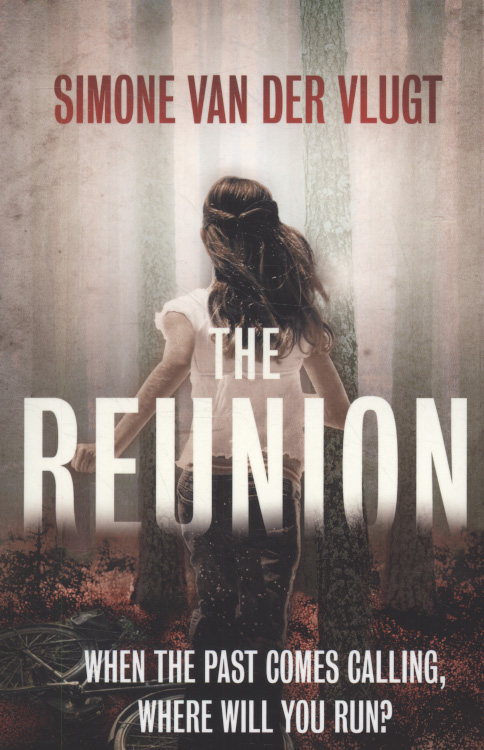
Simone van der Vlugt is one of the writers featured in The Netherlands guide

Each is written by an expert on the crime of the country in question, but all look at similar areas, under the guidance of series editor Bob Cornwell:

– a history of the country’s crime fiction

– recent publishing trends

– notable writers (often by category, e.g. police procedural, historical crime fiction)

– major crime prizes

– key publishers

– key suppliers, festivals and websites

– key reference works

I’m extremely impressed with these guides, which pack a lot of information into a relatively small space. Produced in conjunction with the International Association of Crime Writers, they provide a great resource for beginners and more advanced crime readers alike, and I look forward to seeing more in due course.