
Gillian Flynn, Dark Places (ebook; London: Weidenfeld & Nicolson, 2009) 4.5 stars

Opening line: I have a meanness in me, real as an organ.
I’m working my backwards through Gillian Flynn’s works after reading the incredible Gone Girl (see review here). Dark Places is the author’s second novel, and confirms my impression that she’s one of the most talented and original voices in crime today. Her novels are not necessarily perfect, but they’re extremely well written and have a narrative energy that makes them a red-hot reading experience. In the case of Dark Places, Flynn also takes on a very difficult subject and does so in a way that is both sensitive and groundbreaking. There is an authorial bravery at work here that I very much admire.
The principal narrator of Dark Places is thirty-one year old Libby Day, who in 1985, at the age of seven, survived a night-time massacre at the family farm that left her mother Patty and sisters Michelle and Debby dead. Her brother Ben, a teenager at the time, was convicted of the killings and sentenced to life imprisonment. Twenty-four years on, Libby is living alone, and has used up most of the $300,000 fund set up in her name after the murders. Petulant about the public’s dwindling interest in her, she resembles a former child film-star who can’t comprehend why the offers have dried up. So when she gets a call from a young man called Lyle, offering her money to appear as a ‘special guest’ at his none too subtly named ‘Kill Club’, she agrees to go. There she encounters a group of obsessives who have pored over every detail of the murders, and who are convinced that Ben is the victim of a miscarriage of justice. They offer her more money to talk to others close to the case – effectively positioning her as an investigator into her own family’s murders – and she accepts, partly for the cash and partly due to her own desire for closure. Her often darkly humorous account of events in the present is interspersed with sombre flashbacks to the day of the murders, narrated from the point of view of her mother Patty and brother Ben.
One of the key strengths of this novel for me was its characterisation. Libby, the sole survivor of the massacre, is clearly not depicted as a traditional tragic victim. She is spiky, surly, obsessed with money, and appears to have alienated everyone around her. But at the same time, hers is the voice that is the most moving in the novel, because through her, Flynn vividly realises the themes of grief, trauma and loss. Patty and Ben are also brilliantly portrayed: the thirty-two-year-old single mom trying to look after four children and keep the family farm going during a recession, and the troubled teenager struggling with the transition into manhood. All three characters give a sobering insight into the long-term effects of grinding poverty. Class is a big theme and is deftly handled.
There are some graphic descriptions of violence in the novel that readers may find upsetting. However, my own feeling is that Flynn uses these descriptions to convey the reality of the massacre as a violent and traumatic event, rather than with gratuitous intent. Crucially, we are told the physical details of what happened early in the novel, thus avoiding an excessive build up of readerly curiosity or their use as part of the narrative pay-off. There were perhaps just a few small details at the end of the novel that didn’t ring entirely true to me – a dash too much rural noir – but these don’t obscure the novel’s genuine strengths. Libby and Patty’s voices have stayed with me in particular.
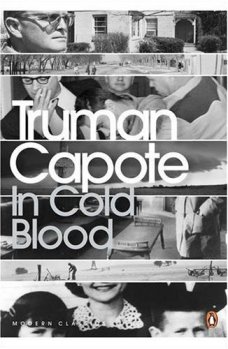
In terms of larger literary influences, Dark Places surely reaches back to In Cold Blood, Truman Capote’s seminal 1966 account of the massacre of a farming family in Kansas (Libby tells us firmly that her farm is near Kansas City, Missouri rather than Kansas City, Kansas, which I read as a neat in-joke that both acknowledges Capote’s influence and asserts an authorial distance from him). I’m also reminded of Andrea Maria Schenkel’s novel The Murder Farm (see my review here), which is very different in style and length, but is another successful literary re-imagining of this kind of case.
By coincidence, an article by Sarah Weinman recently appeared in Book Beast entitled ‘The Original Gone Girls: Dorothy Salisbury Davis and Other Forgotten Pioneers of Crime Fiction’. It focuses on earlier contributions to the psychological thriller by women writers and is well worth checking out.
Mrs. Peabody awards Dark Places an accomplished and memorable 4.5 stars

 Mrs. Peabody Investigates